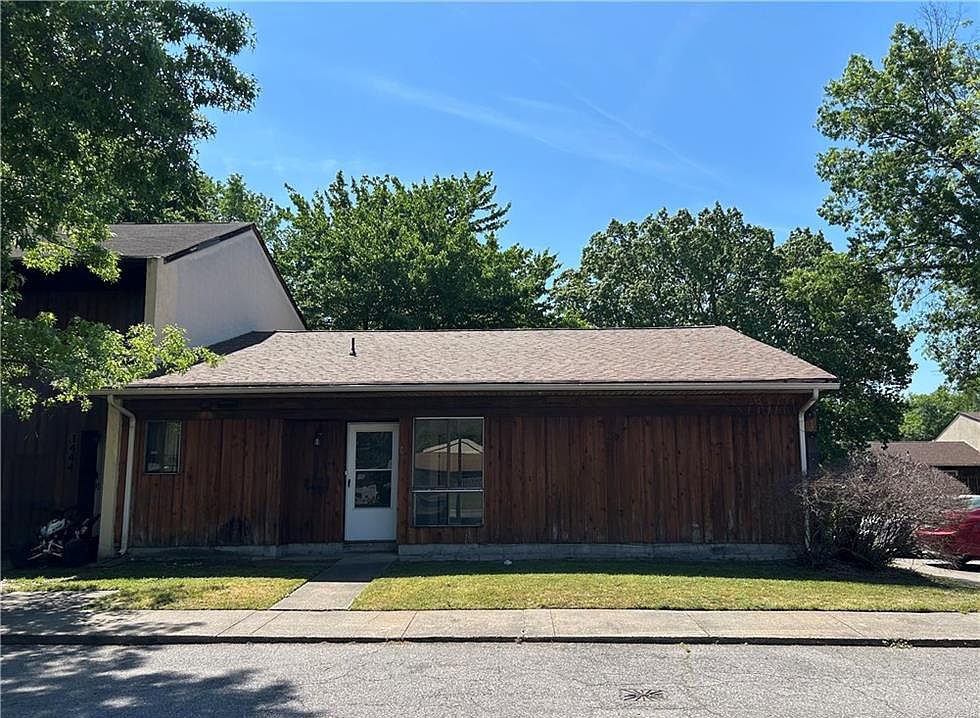
Most case studies show finished houses. This one starts with a tired ranch and ends without keys. It is still the underwrite we show first.
1442 E Tanners Creek Drive in Norfolk is a 1,248 square foot three-bedroom built in 1974. Vertical wood siding, low gable roof, two-car drive, mature trees on a quiet residential street near the Lafayette River corridor. Original listing photos showed exactly what you would expect from a fifty-year-old house that had been owned by the same family for most of its life. Dated kitchen, dated baths, original flooring throughout. No structural alarm bells. No remediation history. A house that needed a renovation, not a rescue.
We saw it through our MLS scan in the spring. It went on the market with a workable asking price for a fix-and-flip operator with discipline. We ran our underwriting, agreed on a tier, and made an offer. We did not get the house. The underwrite is still worth walking through, because the discipline is the repeatable part.
The numbers
1442 E Tanners Creek Dr · Norfolk, VA · 23513
Our offer sat almost thirty-five thousand dollars under our maximum allowable offer. That extra cushion is not luck. It comes from sourcing through the MLS at a moment when the seller priced the property for a fix-and-flip buyer rather than a retail one, and from being patient enough to wait for the right deal rather than chase the next twenty.
How we built the ARV
The ARV is the most important number in any fix-and-flip underwrite. It is also the easiest one to get wrong. We pulled the comp set from the surrounding Norfolk submarket using a fixed boundary: same zip code, similar lot, three or four bedrooms, renovated within the last twenty-four months, sold within the last six. We weighted for square footage on a per-square-foot basis and adjusted for renovation depth. The output sat at roughly $253 per square foot, which puts a renovated 1,248 sq ft three-bedroom at $316,389.
We do not use the highest comp in the set to anchor ARV. We use the median of the closest seven comps and apply a small discount for our exit timing assumption. The result is conservative by design. If the comps drift up by the time we list, the spread widens. If they drift down, we still have buffer.
The rehab plan
The scope is full systems and cosmetic. Roof age and HVAC condition put both at the back of their useful lives, so both come off the table now rather than two years from now. New mechanicals make the appraisal at exit cleaner and the buyer financing easier.
Beyond systems: kitchen with white shaker cabinets and a quartz island, two new baths with simple-but-tasteful tile work, white oak engineered flooring throughout, fresh paint inside and out, refreshed landscaping, and a re-staining of the front porch. The intent is move-in ready for an owner-occupant buyer in the $300,000 range, which is the sweet spot for Hampton Roads first-time buyers in this submarket.
Why we let it go
Another buyer went above our number. Our ceiling said $159,696, and paying past a ceiling to win a bid is how flip operators donate their margin to the seller. The plan you just read, systems-first scope, dual exit, conservative comps, is the plan we carry into every acquisition. When the ceiling says stop, we stop. Losing a house on discipline costs one deal. Breaking discipline costs the model.
Tanners Creek did not become ours. The same underwrite runs on everything that did: one property closed and in renovation, two more under contract. The pattern is identical on each: MLS or direct source, tier-calibrated rehab, ARV pulled from a tight comp set, offer ceiling computed before we talk price, exit modeled with a backup.
Investors who want to see the next one before it goes live can request the deck.